


You punch in your dimensions. Maybe you pick composite decking from a dropdown. A few seconds later, you’ve got a number. Then you get a real quote from an actual contractor, and it’s nowhere close.
It’s not a scam, and the AI tool wasn’t lying to you. It’s just answering a much simpler question than the one your project actually asks. Here’s the gap between the two.
An AI Estimate Knows Two Things: Size and a Material Category
Tools like that are built to take basic inputs, such as length, width, maybe a material tier. Then they run them through an average cost per square foot. This is only genuinely useful for a rough ballpark, but it’s just not enough information to price an actual project. This is because almost none of the things that really move a deck’s price are things you’d type into a form. They require insights an expert can only gather from looking at your property.
It Doesn’t Know How High Your Deck Sits
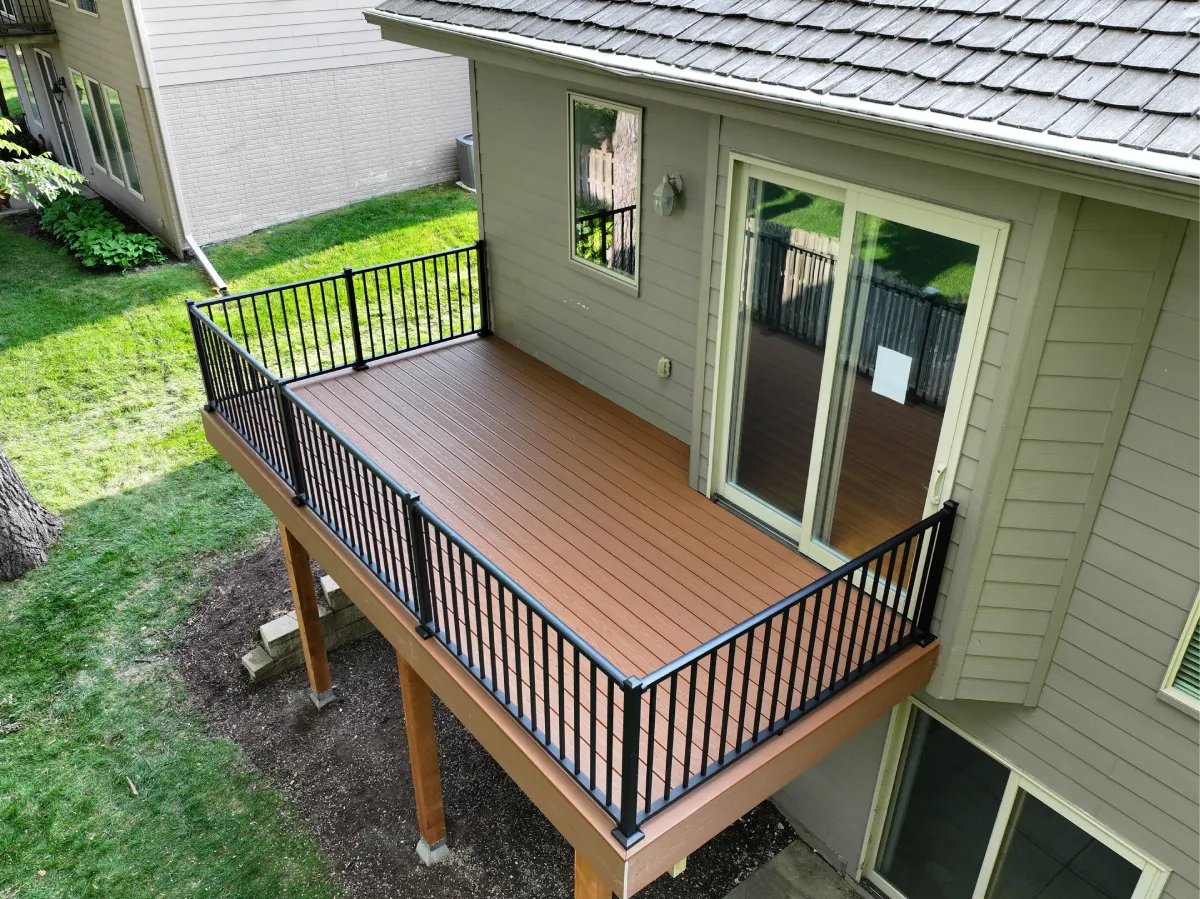
A deck 12 inches off the ground and a deck 8 feet off the ground can have an identical footprint, but completely different structural requirements. Taller decks need bigger footings, taller posts, more bracing, longer stair runs, and some engineering concerns that don’t really matter for a low deck. An online calculator has no idea how far your deck sits above grade unless you tell it, and most tools never ask.
It Doesn’t Know What’s Under Your Yard
Ground conditions change footing costs significantly. Soil that’s easy-digging leads to less costs, while clay, rock, a high water table, or a sloped lot can increase those costs significantly. This is because they take more effort, may need different footing methods, or have other special requirements. No calculator will evaluate your backyard, so it can’t tell you these things.
It Doesn’t Know Which Decking Product You Actually Want
Composite isn’t one coverall term with the same price throughout. It’s a whole range, from entry-level composite boards to premium lines with better fade resistance and longer warranties. An online tool usually assumes a single average product within that category, and doesn’t take into account the price your contractor will get either. A real quote will consider the specific type you’ll actually be buying and using for your project.
It Doesn’t Know Your Railing, Stairs, or Lighting
Basic railing and premium cable or glass railing aren’t in the same universe pricewise, and an AI estimate almost never distinguishes between them. This goes the same with stair count, stair width, post lighting, or hidden fastener systems. These are exactly the details that make a deck feel finished and custom, and they’re exactly the details a size-and-material form can’t capture.
It Doesn’t Know Your Permit Situation
Depending on height, attachment method, and your local jurisdiction, your deck might need engineered drawings and a more involved permitting process. The costs for these permits can greatly vary between different places, so it’s something no generic calculator is built to know.
So What Is an AI Estimate Actually Good For?
It’s a starting point. It gives you a rough sense of scale before you start real conversations, and there’s real value in that. It helps you walk into a quote with realistic expectations instead of guessing blind. What it can’t do is replace an actual site visit, a real conversation about the materials you want, and someone looking at your specific yard.
The gap between the AI number and the real quote isn’t dishonesty on either side. It’s the difference between a rough average and an actual plan built around your project, your ground, and your choices. You should only use these calculators to get a vague idea of what to expect. For the rest, look through what an expert contractor tells you. At Wymore, we offer free consultation for your projects and share a realistic quote depending on your preferences and the project’s requirements. So, call us at (531) 233-3211 and we can take it from there.