


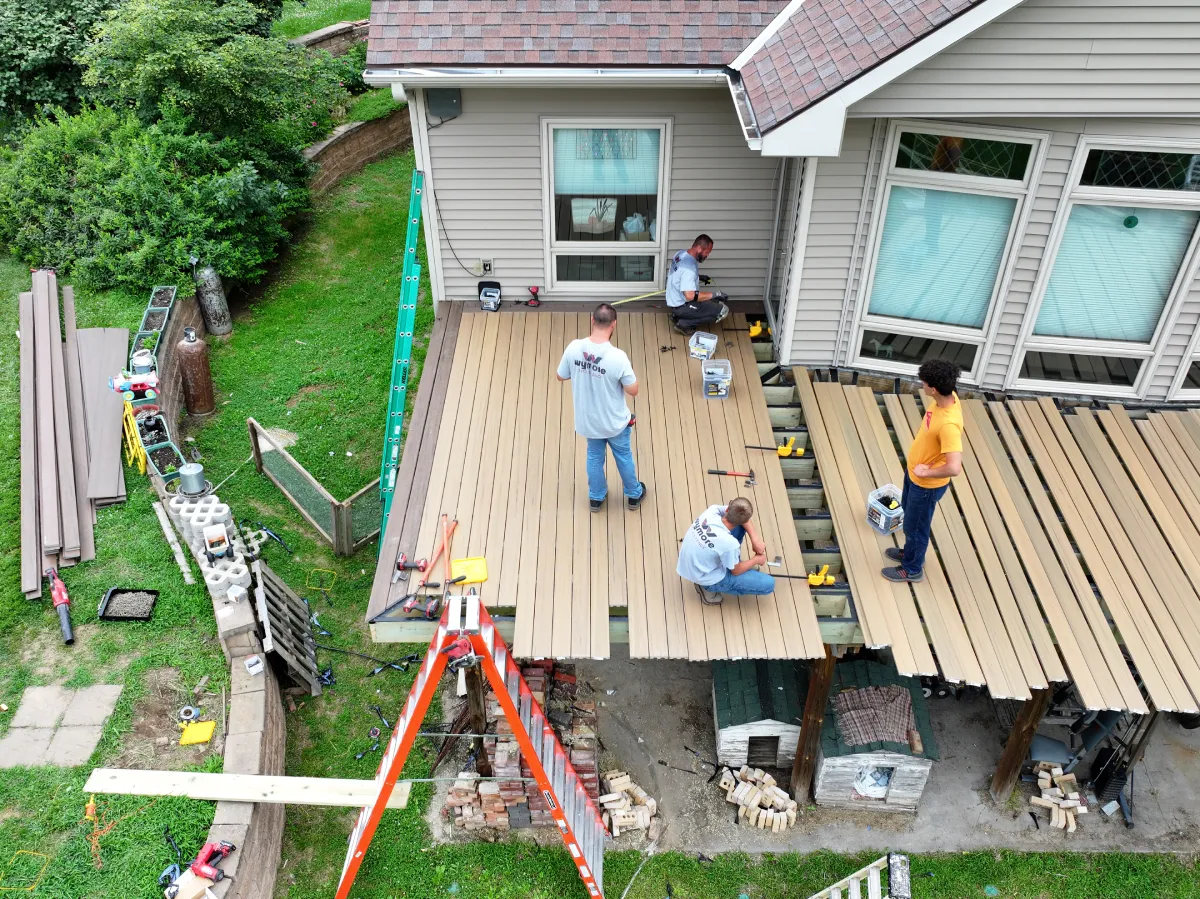
The hidden framework beneath your deck’s surface determines whether your outdoor investment lasts fifteen years or fifty. Quality deck framing creates the structural foundation that supports everything above it, from decking boards to railings to the furniture and people who use the space daily. While homeowners naturally focus on visible elements like deck boards and railings, the unseen framing system carries the actual weight and stress. Cutting corners on this critical component guarantees premature failure regardless of how beautiful the surface materials appear.
Omaha’s climate presents specific challenges that make professional framing expertise essential rather than optional. Freeze-thaw cycles stress connections, moisture from snow and rain attacks lumber, and soil movement affects post stability. Understanding how proper deck framing addresses these threats helps you recognize why this hidden system deserves your attention and investment. The difference between adequate framing and exceptional construction becomes painfully clear over time as poorly built decks sag, bounce, and eventually require complete replacement.
Proper Lumber Selection Resists Decay and Structural Failure
Professional deck framing starts with selecting lumber rated for ground contact and structural use. Pressure-treated lumber receives chemical treatments that penetrate deep into the wood fibers, protecting against rot, insects, and fungal decay. Not all treated lumber meets the same standards, and experienced builders specify appropriate treatment levels based on each component’s exposure to moisture and soil contact.
Joist and beam sizing must match span requirements and anticipated loads. Undersized framing members sag and bounce underfoot, creating unsafe conditions and accelerating wear on decking materials. In Omaha, where decks endure heavy snow loads during winter months, proper sizing becomes critical for preventing catastrophic failures. Professional framers consult span tables and building codes to ensure every structural member exceeds minimum requirements rather than barely meeting them.
Strategic Moisture Management Prevents Wood Deterioration
Water represents the greatest threat to deck longevity, and quality deck framing incorporates multiple strategies to manage moisture effectively. Joists installed with proper spacing allow air circulation that promotes drying after rain or snow events. Flashing protects vulnerable areas where framing contacts the house, preventing water infiltration that causes rot in both deck structure and home exterior.
Proper slope in the framing ensures water drains away from the house rather than pooling on the deck surface or collecting against the ledger board. Even a quarter-inch per foot slope makes a substantial difference in how quickly decks dry after precipitation. Professional installers also use joist tape on top of framing members, creating a barrier that prevents moisture from decking boards from sitting directly against structural lumber. These moisture management details extend deck life dramatically compared to frames built without these protections.
Secure Fastening Systems Maintain Structural Integrity
The hardware connecting framing components determines whether your deck holds together through years of use and weather exposure. Quality deck framing uses hot-dipped galvanized or stainless steel fasteners that resist corrosion in treated lumber. Standard nails and screws corrode quickly when used with pressure-treated wood, losing holding power and creating dangerous structural weakness.
Joist hangers provide superior support compared to toe-nailing methods that rely on angled fasteners. These metal brackets cradle joists and transfer loads directly to beams, creating connections that won’t loosen or fail over time. Omaha builders also use proper ledger attachment techniques, including appropriately sized lag screws or through-bolts spaced according to code requirements. The ledger board anchors your deck to your house, and failure at this connection point causes complete deck collapse. Professional framing treats every connection as critical rather than assuming good enough will suffice.
Foundation and Post Installation Ensures Long-Term Stability
Deck posts transfer the entire structure’s weight to the ground, making their installation crucial for lasting performance. Professional deck framing includes properly sized concrete footings that extend below frost line depth to prevent heaving during freeze-thaw cycles. In Omaha, this means digging footings at least 48 inches deep to avoid seasonal movement that tilts posts and racks the entire frame.
Post-to-footing connections must keep wood from sitting in standing water while providing secure attachment. Elevated post bases lift lumber above moisture while anchoring firmly to concrete. These specialized brackets cost more than simply setting posts in concrete, but they prevent the rot that destroys conventional installations within a decade. Proper post spacing and sizing also matters, as undersized or widely spaced posts create bounce and instability that undermines the entire structure.
Code Compliance Protects Safety and Property Value
Building codes exist because certain construction methods prove dangerous or inadequate over time. Quality deck framing meets or exceeds all applicable codes, ensuring your structure handles anticipated loads safely. Professional builders obtain permits and schedule inspections that verify proper construction before covering framing with decking boards. This documentation protects you when selling your home and prevents liability issues if someone gets injured.
Omaha’s specific code requirements address local soil conditions, snow loads, and seismic considerations. Experienced deck builders stay current with these regulations and understand how they apply to different property types and deck designs. They also recognize when code requirements represent minimums that prudent builders should exceed for optimal performance. This expertise prevents the costly mistakes that force homeowners to tear down and rebuild decks that failed inspection or prove structurally inadequate.
Invest in the Foundation That Supports Everything Else
Your deck’s visible beauty and functionality rest entirely on the quality of its hidden framework. Proper deck framing costs more initially than budget construction, but this investment pays enormous dividends through decades of reliable service. The alternative means replacing your entire deck prematurely, spending far more than you saved by accepting substandard framing work.
Wymore Deck & Fence builds every deck with structural framing that exceeds code requirements and withstands Omaha’s demanding climate. Our experienced team selects appropriate materials, installs proper moisture management systems, and uses superior fastening methods that ensure lasting stability. We handle all permitting and inspections, giving you confidence that your deck meets every safety and performance standard.
Ready to build a deck that lasts generations rather than just years? Call Wymore Deck & Fence at (531) 233-3211 to discuss your project. We’ll explain our framing approach, show you the quality difference, and provide transparent pricing for construction that protects your investment. Don’t settle for adequate when exceptional framing costs only marginally more. Contact us today and discover why Omaha homeowners trust our expertise for decks built to endure.